



 588 692

with cavernous tissues cultured with autologous PBMCs
( Fig. 2 a) (
p
= 0.0095). Following premaximal contraction
with PE, EFS-mediated relaxation was also impaired in
rejecting tissues comparedwith nonrejecting tissues
( Fig. 2b)
(
p
= 0.0148). Given the relatively short exposure time (48 h),
these data suggest that cavernous tissue physiological
function is sensitive to this model of rejection.
3.2.
Prevention of and characterization of rejection in the ex
vivo mixed lymphocyte reaction
Given the effects of rejection on corporal tissue function, we
next investigated whether penile tissue rejection could be
prevented by CsA, a well-known calcineurin inhibitor
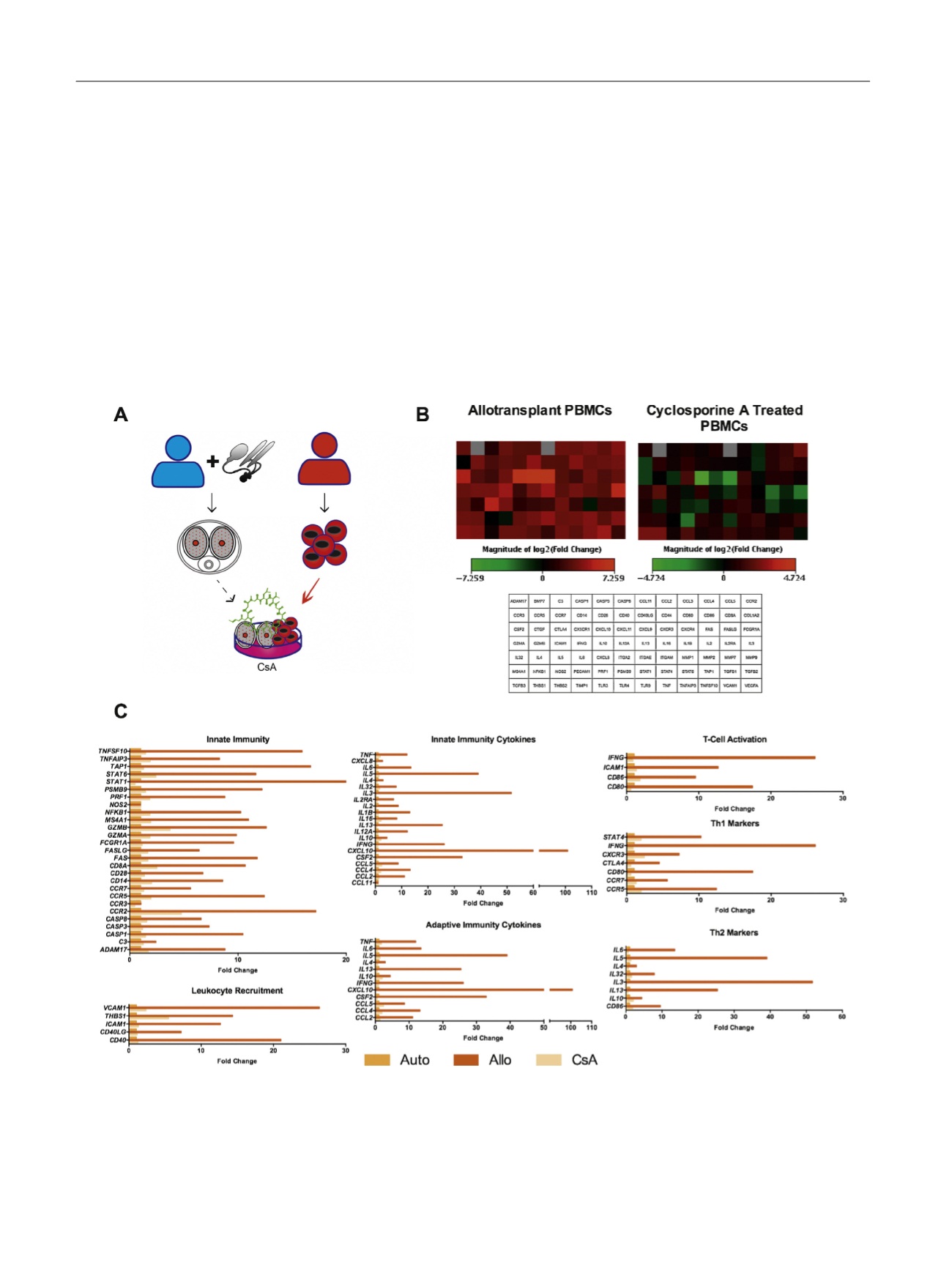
commonly used for immunosuppression. Ex vivo MLR
was prepared as above with an additional group comprising
cavernous tissues cultured with allogenic PBMCs treated
with 1
m
M CsA
( Fig. 3 a), a dose previously shown to prevent
PBMC activation in MLR rejection
[10] .A human quantita-
tive PCR gene expression array assessing 84 transplant-
associated genes was used to further characterize the
rejection process in the ex vivo MLR and to determine
whether CsA treatment can prevent rejection
( Fig. 3b and
3c). Array analysis normalized to autotransplant tissues
demonstrated global increased transplant-associated gene
expression in PBMCs exposed to allogenic cavernous tissue
compared with PBMCs exposed to autologous cavernous
tissue, which was attenuated by CsA immunosuppression
( Fig. 3b). Pathway analysis demonstrated increased
activity in innate immunity, adaptive immunity, leukocyte
[(Fig._3)TD$FIG]
Fig. 3 – An additional experimental group (a) composed of an allotransplant (Allo) mixed lymphocyte reaction (MLR) treated with 1
m
M cyclosporine A
(CsA) was added to investigate the effects of immunosuppression treatment on penile rejection and function. (b) Heat map of an 84-gene polymerase
chain reaction human transplant array of peripheral blood mononuclear cells (PBMCs) removed from cavernous tissue MLR after 48 h of culture.
Expression was normalized to the autotransplant group. Allotransplant PBMCs demonstrated generalized increased expression of transplant-associated
genes. PBMCs treated with 1
m
M CsA demonstrated decreased transplant-associated gene expression compared with Allo. (c) Bar graphs of gene
expression of transplant-associated genes grouped by function demonstrated rejection occurring in the Allo group that was mitigated by CsA
treatment.
n
= 3 per group.
Allo = allotransplant; Auto = autotransplant; CsA = cyclosporine A; PBMC = peripheral blood mononuclear cell.
E U R O P E A N U R O L O G Y 7 1 ( 2 0 1 7 ) 5 8 4 – 5 9 3
588